
Fixed-Price Framing Contract BC: Why It Protects Custom Home Budgets
July 13, 2026 | Category: Framing Resources

A fixed-price framing contract protects a custom home budget by turning the approved framing scope into a defined price before the crew starts. It works best when the drawings, engineering, lumber package, inclusions, exclusions, schedule assumptions, and change-order rules are clear. If you are comparing bids for a custom home framing contractor, the goal is not just the lowest number. The goal is a clear scope that reduces surprises once the frame is underway.
Fixed price does not mean nothing can change. It means the known framing scope is priced clearly, while revised drawings, owner changes, site delays, missing information, trade interference, or added work are handled through a defined change-order process.
Fixed-Price Framing Contract BC: Budget Protection At A Glance
A fixed-price framing contract gives you a clearer budget baseline because it defines what the framer is pricing before work begins. That matters on custom homes, where small gaps in drawings, materials, access, or trade sequencing can turn into budget movement once the frame is underway.
A fixed price is only as strong as the scope behind it. The risks below show where a fixed price helps and what still needs to be managed.
| Budget Risk | How A Fixed-Price Contract Helps | What Still Needs To Be Managed |
| Unclear Scope | Defines what framing work is included | Exclusions and owner-supplied items must be written down |
| Labour Overruns | Prices known work before the crew starts | Site delays and scope changes still need rules |
| Material Confusion | Identifies who supplies lumber, connectors, hardware, and panels | Supplier substitutions and late design changes need review |
| Drawing Changes | Separates priced work from revised work | Change orders need approval before work proceeds |
| Inspection Delays | Encourages inspection and document readiness | Municipality, engineer, and trade timing still affect schedule |
| Budget Drift | Gives owners and builders a clearer baseline | Unknown conditions and client changes need contingency |
The Government of Canada’s Office of Consumer Affairs advises homeowners to compare quotes using the same specifications and says contracts should include details such as the work to be done, who is responsible for materials and permits, total cost, payment schedule, taxes, start and completion dates, warranty, and cleanup. That general contract guidance fits framing well: the more detail behind the price, the less room there is for confusion later.
What A Fixed-Price Framing Contract Means

A fixed-price framing contract sets a defined price for a defined framing scope. It should say what drawings are being priced, what work is included, what is excluded, who supplies materials, how payments are made, and how changes are handled.
For custom homes, that clarity matters because framing touches almost every later stage. Walls, openings, stairs, roof structure, backing, blocking, sheathing, inspection readiness, and trade routes all affect the budget if they are not defined early.
Fixed Price Versus Estimate
A fixed price is a contract price for a defined scope. An estimate is usually a planning number that can move as the project becomes clearer. Both can be useful, but they are not the same.
For framing, fixed price works best when the drawings, structural details, site assumptions, and material package are developed enough to price. If the design is incomplete, the contractor may need allowances, exclusions, qualifications, or a later pricing update.
This is why you should ask what the number is based on. “Per plans” is not enough unless the contract names the plan set, revision date, structural drawings, and supplier information behind the quote.
Fixed Price Versus Time And Materials
Time and materials can work when the scope is uncertain. It gives flexibility when a renovation has hidden conditions, when discovery work is needed, or when the project team cannot define the work yet. The trade-off is that the final cost depends on actual hours, material use, and site progress.
Fixed price gives the owner and builder a clearer baseline. It works well when the custom home frame has strong drawings, a clear sequence, and enough information to price responsibly. The framer carries the risk of delivering the known scope efficiently, while the owner has a clearer number to plan around.
Neither structure is automatically better in every case. The best choice depends on how complete the drawings are, how much uncertainty exists, and how the contract handles changes.
What Fixed Price Does Not Cover Automatically
Fixed price does not automatically absorb owner changes, revised drawings, missing engineering, unsafe access, trade delays, added work, or conditions that were excluded from the quote. Those items should be handled through a clear change-order process.
This is the honest value of fixed price. It protects the known scope by drawing a line around it. When something changes outside that line, the contract should explain how the cost and schedule impact will be reviewed.
A good fixed-price contract does not pretend there are no risks. It makes the risks easier to see, price, and manage before they become conflict.
Why Fixed Price Protects A Custom Home Framing Budget
Custom home budgets often drift when scope is unclear. A fixed-price framing contract helps prevent that by putting the known work, price, and assumptions in writing before the crew starts.
That clarity helps the owner, builder, architect, and framer have better conversations. When a cost moves, everyone can ask what changed instead of arguing over what was included.
It Creates A Clear Budget Baseline
A fixed-price framing contract gives the owner and builder a baseline number for the framing scope. That makes it easier to compare framing against the overall custom home budget, lender expectations, and other trade pricing.
A clear baseline also makes cost movement easier to understand. If the price changes, the team can trace the cause. It may be a design revision, material change, added opening, site delay, inspection issue, or extra scope.
Without that baseline, budget conversations become vague. With it, the project team can separate planned work from changed work.
It Makes Bids Easier To Compare
Fixed-price bids are easier to compare when every contractor prices the same drawings, scope, material responsibilities, and assumptions. If one quote includes hardware, backing, rough openings, engineered member installation, lift equipment, and sheathing, while another quote excludes them, the lower number may not protect the budget.
The same guidance recommends reviewing quotes carefully and making sure estimates use the same specifications so they can be compared effectively. It also says estimates should include costs, applicable taxes, a project outline, and at least a partial cost breakdown.
For framing, that means you should compare scope, not just price. A more complete quote often gives better budget control than a thin number with unclear exclusions.
It Reduces Open-Ended Labour Risk
Framing can become expensive when a crew waits on missing drawings, works around blocked access, rebuilds revised details, or loses continuity because the site is not ready. A fixed-price contract encourages the project team to define readiness before work begins.
A strong agreement should identify what the framing contractor controls and what must be ready from the builder, engineer, supplier, or other trades. That includes access, approved drawings, material delivery, foundation readiness, site safety, and inspection sequencing.
The clearer those assumptions are, the easier it is to protect the labour plan. The crew can frame instead of spending paid time sorting out preventable field problems.
What Should Be Defined Before The Price Is Locked In

A fixed-price framing contract should not be rushed. The price is more meaningful when the project is developed enough to understand the scope, sequence, materials, and risks.
This stage is where good pricing starts. Before the number is locked in, the team should review the drawings, engineering, material package, site readiness, schedule assumptions, and inspection path.
Approved Drawings And Current Revisions
The framing quote should be based on a named drawing set, revision date, structural package, and any consultant or supplier documents that affect framing. Avoid vague language like “per plans” unless the contract clearly identifies which plans.
Drawing control matters on site too. The City of Vancouver says one printed copy of the City-approved permit and one full-size paper set of City-approved drawings with the accepted stamp need to be available at the jobsite for City inspectors. It also notes that a missing accepted stamp or missing paper set may require the inspection to be rescheduled and may lead to a reinspection fee.
For a fixed-price contract, current drawings protect both sides. The owner knows what is priced, and the framer knows what it is responsible to build.
Engineering, Lumber Package, And Supplier Layouts
Beams, posts, joists, trusses, I-joists, hold-downs, hangers, connectors, shear details, and engineered members should be reviewed before the fixed price is finalized. Missing supplier layouts can create uncertainty around labour, hardware, lifts, sequencing, and installation responsibility.
This is especially important on custom homes with large openings, long spans, feature stairs, complex rooflines, and engineered floor systems. The framing crew needs to understand how the lumber package fits the approved design.
Missing supplier layouts create uncertainty around labour, hardware, lifts, and installation, so the choice between engineered lumber and dimensional lumber should be settled before pricing is locked in.
Site Readiness And Access Assumptions
The contract should state assumptions around foundation readiness, material delivery, access, staging, lift equipment, lane or street constraints, temporary stairs, backfill, drainage, and weather protection. These details affect labour and schedule.
For example, a framing price may assume the foundation is ready, access is safe, the site can receive lumber, and the crew can work in a reasonable sequence. If the site is blocked, unbackfilled, missing safe access, or not ready for material, the work can slow down.
A fixed price is stronger when the handoff is predictable. This is where Anvil West’s forming-to-framing perspective helps because foundation conditions, anchors, bearing points, and access all affect the frame.
Schedule And Inspection Assumptions
Framing prices depend on a reasonable sequence, not constant stop-start work. The contract should identify assumptions around start date, crew continuity, inspection readiness, engineer reviews, and when work can be covered.
Inspection timing can affect cost because crews may need to return, uncover work, or wait for required reviews. The schedule should make room for those checkpoints instead of treating them as surprises.
The stronger the schedule assumptions, the easier it is to protect the fixed price. Clear sequencing helps the crew keep momentum and helps the builder plan other trades.
What A Fixed-Price Framing Scope Should Include
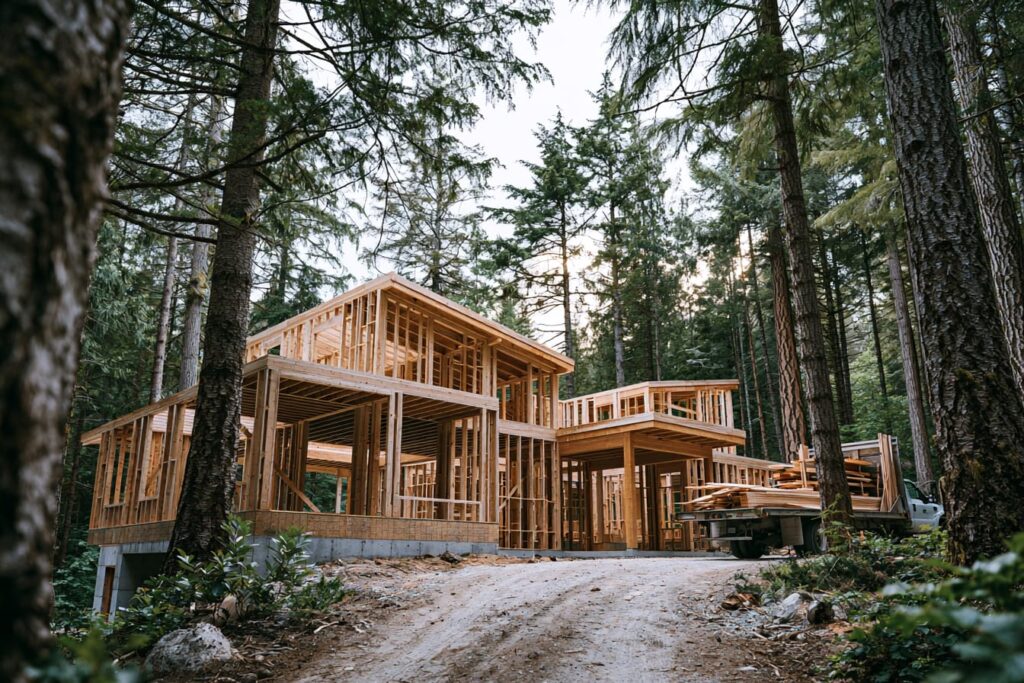
A fixed-price framing scope should describe the work in enough detail that the owner, builder, and framer understand what is included. The goal is not to write a novel. The goal is to remove the common grey areas before the crew starts.
For custom homes, scope clarity matters because framing is not just studs and joists. It includes the structure and the small details that help later trades work cleanly.
Core Framing Work
Core framing work may include sill plates, floor systems, beams, posts, joists, wall framing, backing, blocking, stairs, upper floors, roof framing, sheathing, bracing, and the standard scope required to build the wood frame from the approved plans.
The contract should also be clear about what part of the frame is included. Some scopes may include roof sheathing and wall sheathing. Others may separate certain exterior details, structural steel, specialty stairs, or architectural features.
Because the frame comes together in sequence from sill plate to roof, understanding the full custom home framing process helps clarify which parts of that structure the scope covers.
Materials, Hardware, Equipment, And Labour
The contract should define who supplies lumber, engineered members, connectors, hangers, nails, fasteners, anchors, lift equipment, crane time, bins, site protection, and consumables. If materials are owner-supplied or builder-supplied, the contract should state how missing or late materials affect schedule and cost.
Material responsibility is one of the biggest sources of confusion. A labour-only framing price is not the same as a labour-plus-material package. A quote that includes engineered members is not the same as a quote that assumes they are supplied by others.
The contract should also state how substitutions are handled. A change in member size, supplier package, hardware, or installation detail can affect both labour and price.
Backing, Blocking, Rough Openings, And Trade Support
Framing scope should define backing for cabinets, guards, railings, fixtures, stair details, mechanical chases, rough openings, window and door coordination, and trade-related framing support. These small items often create budget friction when they are not written down.
Backing and blocking can look minor until they are missed. Then they can lead to drywall cuts, trade callbacks, schedule delays, and arguments about who should pay for the fix.
A clear fixed-price scope reduces those arguments. It tells the team which “small details” are part of the framing contract and which are extra or handled by others.
What Should Be Listed As Exclusions Or Allowances
Exclusions are not a trick. Good exclusions make a fixed price cleaner because they show what is not included. That transparency helps the owner and builder compare quotes and plan contingency.
Allowances can also be useful when something is not fully resolved yet. The key is to use them honestly and explain what they cover.
Common Exclusions In Framing Contracts
Common framing exclusions may include design revisions, permit delays, engineering redesign, survey work, excavation, concrete work, waterproofing, scaffolding beyond the defined scope, crane or lift upgrades, weather delays, utility conflicts, and work caused by other trades.
Exclusions vary by contractor and project. The important point is that they should be written down. A missing exclusion can turn into a budget argument later.
A clear exclusion is better than a vague promise. It lets the owner and builder decide whether to add scope, carry a contingency, or assign the responsibility elsewhere.
Allowances For Unresolved Items
Allowances can be used when a project needs a budget placeholder for unresolved items. That might include specialty hardware, roof details, temporary access, architectural features, or late supplier packages.
However, allowances should not be used to hide unclear scope. The contract should explain what each allowance covers, how it will be tracked, what happens if it is exceeded, and how the final cost will be approved.
A good allowance gives the team a planning number without pretending the detail is finished. It keeps the budget honest while the design or supplier information catches up.
Owner Changes And Design Revisions
Owner changes and design revisions are common causes of budget movement. If a stair changes, roof shape changes, window opening changes, beam changes, or framing detail is revised after pricing, the original fixed price may no longer apply.
The contract should explain how changes are priced, approved, and scheduled. That keeps the owner from being surprised and keeps the contractor from absorbing work that was never part of the agreed scope.
The cleanest approach is simple: document the change before the work proceeds whenever possible. Urgent safety or sequencing issues should be handled under the process already defined in the contract.
How Change Orders Keep The Budget Honest

Change orders often get treated as bad news, but they are really a budget-control tool. They separate the original scope from revised scope so everyone can see what changed and why.
A fixed-price contract needs a clear change-order process to stay fair. Without it, changes can become informal, emotional, and hard to track.
What Counts As A Change Order
A change order may be needed for revised drawings, added framing work, deleted work, changed materials, delayed access, added equipment, rework caused by others, or field conditions outside the agreed assumptions.
The principle is direct: when the scope changes, the price or schedule may need to change too. The change order documents that movement before it becomes confusion.
Not every small clarification is a formal change. However, anything that affects labour, materials, sequence, equipment, or responsibility should be reviewed before the crew proceeds.
Why Approval Before Work Matters
Change orders should be reviewed and approved before extra work proceeds whenever possible. This helps the owner and builder make decisions with cost visibility instead of receiving surprises after the work is complete.
Federal home renovation guidance also suggests major projects are best broken into phases and that added jobs should clearly amend the original contract. That principle applies well to framing changes: when work is added, the contract should be updated clearly.
Approval before work also protects the schedule. The builder can decide whether the change is worth the cost, whether it affects other trades, and whether it needs design or engineering review.
How A Clear Change Process Reduces Conflict
A clear change process helps everyone separate original scope from revised scope. The conversation changes from “why did the price go up?” to “what changed, who requested it, what does it cost, and how does it affect schedule?”
That shift matters on custom homes. Owners, builders, architects, and trades all make decisions under pressure. A clear process keeps those decisions organized.
Organized communication helps clients and builders enjoy more of the journey. It does not remove every challenge, but it makes the framing phase feel more controlled.
How Payment Schedules And Milestones Should Work
A fixed-price framing contract should explain how payments line up with the work. Payment clarity protects the owner and the contractor because both sides know what each claim represents.
Tie Progress Payments To Framing Milestones
Progress payments should connect to clear framing milestones. Those milestones may include mobilization, first floor system, walls, roof framing, sheathing, inspection readiness, or defined completion stages.
This helps the owner and builder understand what has been completed and what remains. It also helps the framer plan labour, materials, and crew continuity.
Avoid relying only on calendar dates. A milestone-based structure is usually easier to connect to the real progress of the frame.
Separate Deposits, Materials, And Progress Claims
Deposits, material procurement, and progress claims should be clearly separated so the owner understands what is being paid for. If the contractor is ordering lumber, engineered members, hardware, or specialty items, the contract should define timing and responsibility.
The Canada Revenue Agency notes that written home construction contracts often call for progress payments as work proceeds and that those payments are usually for completed work, though they can also be made in anticipation of work being completed. This is a tax administration source, so use it as broad context, not tax advice.
Clear payment wording reduces stress. The owner knows what money is tied to, and the contractor knows how procurement and progress will be funded.
Keep Taxes, Holdbacks, And Completion Terms Clear
Taxes, holdbacks, substantial completion, deficiency closeout, and final payment should be clear in the contract. These items affect the final budget as much as the headline framing price.
Budget protection is not just the fixed number. It is also how payments, changes, deficiencies, and closeout are handled.
Where Fixed Price Can Fail If The Scope Is Weak

A weak fixed-price scope can create false confidence. The number may look firm, but if the drawings, materials, exclusions, site assumptions, and change process are vague, the budget can still move.
The goal is not to avoid fixed price. The goal is to make the fixed price strong enough to rely on.
Incomplete Drawings Or Missing Engineering
Incomplete drawings make fixed pricing risky because the contractor must either qualify the quote, add allowances, or price unknowns conservatively. Missing beam schedules, stair details, roof details, hold-down information, or supplier layouts can all affect framing cost.
A framer can help identify missing information before pricing is locked in. That review can prevent a low early number from turning into several changes later.
This is why responsible pricing may take more time upfront. A careful review protects the owner’s budget better than a fast quote built on unclear scope.
Undefined Materials Or Substitutions
Fixed-price contracts become unclear when the quote does not define materials. Engineered lumber, dimensional lumber, prefab components, hardware, sheathing, specialty fasteners, and connectors can all affect cost and labour.
Substitutions also need control. A different beam, joist package, hanger type, or panel system may change the installation sequence. Even if the material cost looks similar, the labour may not be.
The framing material package should be reviewed before the contract is finalized so price and scope match the actual build.
Site Delays And Trade Interference
Fixed price can become strained when the framing crew is delayed by an unready foundation, poor access, blocked staging, missing materials, unresolved inspections, or other trades working out of sequence.
This is not about blaming other trades. It is about defining readiness. The contract should explain what the site needs to provide before the framer mobilizes and how delays outside the framer’s control are handled.
A fixed price protects the planned scope. It still needs a practical site plan to protect the planned sequence.
How Fixed Price Supports Inspection And Schedule Readiness
Budget protection is not only about the contract price. It is also about building the frame correctly, keeping documents current, and preparing the site for review before cover-up.
A fixed-price scope should connect to the real jobsite sequence. If the frame is not ready for inspection, the budget can be affected by return visits, uncovering, deficiency work, or trade delays.
Inspection Readiness Is Part Of Budget Control
Failed or delayed inspections can affect budget because crews may need to return, uncover work, fix deficiencies, or wait for documents. A strong fixed-price scope should include the framing details needed for rough-in inspection readiness.
Those details may include blocking, backing, connectors, openings, stairs, trade penetrations, engineered member documents, and access. The scope should also identify which inspections or field reviews affect the framing sequence.
Knowing what gets checked at a framing rough-in inspection helps the crew prepare the blocking, connectors, and openings that need to be visible before walls are covered.
Approved Drawings Need To Stay Current On Site
Drawing control matters during framing. If the site works from old drawings, the fixed price can quickly become unclear because the crew may be building one scope while the project team expects another.
The City of Vancouver says one printed copy of the City-approved permit and one full-size paper set of City-approved drawings with the accepted stamp need to be available at the jobsite for City inspectors. It also notes that missing stamped drawings at the jobsite can require rescheduling and may lead to a reinspection fee.
The practical lesson is simple. Keep the current drawings on site, and make sure revisions are communicated before work is framed.
Reinspection And Not-Ready Sites Can Affect Cost
If work is not ready, access is unsafe, plans are missing, or work has moved beyond an inspection point, the project may face extra time, fees, or rework depending on the municipality and permit package. The situations that trigger additional inspection fees include a site that is not accessible or safe, plans or representatives that are not available when required, work that needs reinspection, work that has progressed beyond the inspection point requiring uncovering, or work that is not ready at the scheduled time.
Budget protection includes not booking work or inspections before the site is ready. A rushed inspection can cost more time than a well-planned one.
A fixed-price contract should support inspection readiness by defining the scope, documents, access, and responsibilities that help the inspection proceed.
Plan Your Fixed-Price Framing Contract Before The Frame Starts
A fixed-price framing contract protects the budget when the framing scope is clear before the crew arrives. The strongest contracts define the drawings, inclusions, exclusions, material responsibilities, schedule assumptions, payment milestones, and change-order process.
Anvil West brings Red Seal-led field leadership, stable crews, and owner-led coordination to custom home framing across Vancouver and the Lower Mainland. To review your framing scope before pricing is locked in, work with a residential framing contractor in the Lower Mainland that understands how contract clarity protects the field sequence.
You can book a consultation with our team before your framing contract is finalized.
Frequently Asked Questions
What Is A Fixed-Price Framing Contract?
A fixed-price framing contract sets a defined price for a defined framing scope. It should identify the drawings, inclusions, exclusions, materials, payment schedule, change-order process, and assumptions behind the price. For a custom home, the fixed price should be tied to a clear drawing set and scope of work. Without that detail, the contract may still leave too much room for budget movement.
Does Fixed Price Mean The Framing Cost Can Never Change?
No. Fixed price protects the known scope. Costs can still change if the drawings change, the owner adds work, site conditions differ from the assumptions, materials are substituted, or other trades create delays outside the agreed scope. That is why a clear change-order process matters. It defines how changes are priced, approved, and scheduled.
Is Fixed Price Better Than Time And Materials For Framing?
Fixed price is often better when the drawings, engineering, lumber package, and site conditions are clear because it gives the owner and builder a stronger budget baseline. Time and materials may fit unclear work, discovery work, or renovation conditions with more unknowns. The right structure depends on risk. Clear new-build framing often suits fixed price, while uncertain renovation or discovery work may need more flexibility.
What Should Be Included In A Fixed-Price Framing Quote?
A strong quote should define the framing scope, drawings, labour, materials, hardware, engineered members, equipment, backing, blocking, sheathing, roof framing, assumptions, exclusions, and payment milestones. It should also state who supplies materials and how delays, substitutions, or missing information are handled. That detail helps prevent budget disputes.
What Causes Change Orders In Framing?
Common change-order causes include revised drawings, added openings, changed roof details, beam changes, material substitutions, missing supplier layouts, delayed site access, other trade conflicts, or work that was excluded from the original scope. Change orders are not automatically a sign of poor planning. When used properly, they keep changed work clear and approved.
When Should A Fixed Framing Price Be Locked In?
The price should be locked in after the drawings, structural details, lumber package, site readiness assumptions, and framing scope are clear enough to price. Locking in too early can create allowances, exclusions, or later revisions. A responsible contractor may ask questions before final pricing. That review protects the budget more than a fast number based on incomplete information.
Can A Fixed-Price Framing Contract Include Materials?
Yes. A fixed-price framing contract can include labour only, labour plus defined materials, or a broader framing package. The contract should state who supplies lumber, engineered members, connectors, hardware, equipment, and specialty items. If materials are supplied by the builder or owner, the contract should explain how missing, late, or substituted materials affect schedule and cost.
Should A Lawyer Review A Framing Contract?
For contract-specific legal questions, owners and builders should get legal advice before signing. This article explains framing scope and budget planning, but it does not replace legal, tax, insurance, or accounting advice. A contract review is most useful before work starts. Once framing is underway, unclear terms are harder to correct.